






Understanding and interpreting a dog’s body language is essential for safe and effective grooming. Reading a dog correctly helps predict reactions, maintain the dog’s comfort, and reduce the risk of injury to both the dog and the groomer.
Stress Signals
Some dogs enjoy grooming due to repeated positive experiences, while others find grooming stressful. Recognizing stress signals allows professionals to adjust grooming procedures, reduce discomfort, and prevent escalation.
Common signs of stress include visible whites of the eyes (often called “whale eye”), dilated pupils, sweaty paws, ears held back, stiff posture, trembling, displacement behaviors, avoidance behaviors, and threatening behaviors.
Stress signals indicate that a dog is uncomfortable, fearful, or overwhelmed. Early recognition allows intervention before aggression occurs.
Calming Signals
Dogs use calming signals to communicate discomfort, reduce tension, and avoid conflict. These signals are used with both dogs and humans and can express emotions such as fear, excitement, confusion, or stress.
Many calming signals overlap with stress signals. Dogs often use these behaviors to de-escalate situations rather than to challenge or resist handling.
Common calming signals include turning the head or body away, moving slowly, avoiding eye contact, play bowing, licking the nose or lips, sitting down, sniffing the ground, walking in a curved path, yawning, showing teeth in a relaxed “smile,” and tail wagging.
Breed type, personality, and physical structure may influence how clearly these signals are shown.
Interpreting Calming Signals
Calming signals are often misunderstood as disobedience or resistance. For example, when grooming around the face, a dog may turn his head away, yawn, or avoid eye contact. These actions are not attempts to misbehave. They are signals that the dog is uncomfortable.
A dog should never be punished for showing calming signals or signs of anxiety. Punishment increases stress and may provoke aggression. Suppressing calming signals removes early warning signs and increases the risk of sudden biting behavior.
Appropriate responses include slowing down, adjusting handling, pausing the procedure, or changing the environment to help the dog relax.
Using Calming Signals as a Groomer
Groomers can also use calming signals to help reduce anxiety. These include lowering the voice, slowing movements, avoiding direct eye contact, turning slightly away, yawning, or pausing briefly.
Using calming signals does not stop true aggression, but it may help reduce anxiety in mildly stressed dogs. Not all dogs respond visibly, but calm behavior from the handler supports a lower-stress environment.
The Five F’s (Stress Responses)
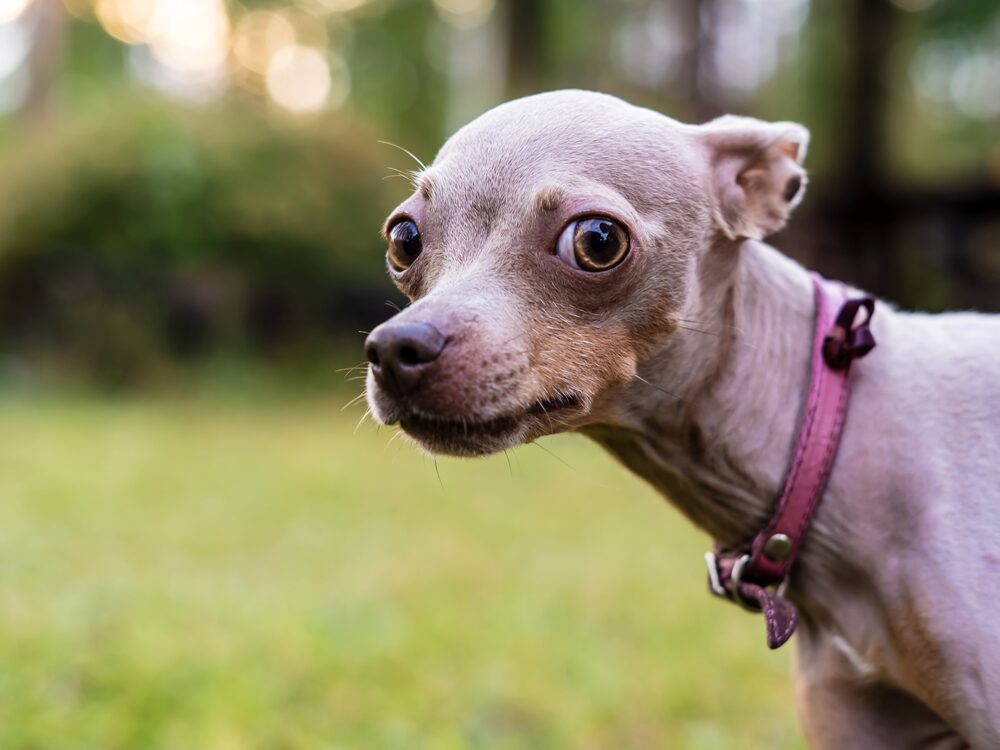
When dogs experience extreme stress, they rely on instinctive responses known as the “Five F’s.”
Fight refers to aggressive behaviors such as growling, snapping, or biting.
Flight refers to attempts to escape or move away.
Freeze refers to becoming stiff, rigid, or immobile.
Faint refers to collapsing or shutting down due to overwhelming stress.
Fool Around refers to playful or distracting behaviors used to cope with stress.
In grooming environments, dogs often cannot choose flight due to restraint or elevation. As a result, they may freeze or fight instead. A frozen dog should be taken seriously, as freezing may precede biting or emotional shutdown.
Some dogs cope by fooling around, such as licking, jumping, rolling over, or fidgeting. Although these appear playful, they may be stress responses rather than true play.
Key Learning Point
Dogs communicate stress and discomfort long before aggression occurs. Reading body language, responding appropriately, and avoiding punishment helps maintain safety, trust, and comfort during grooming procedures.